Name and title Dr. Thomas Winters, guest professor of AI at KU Leuven Dr. Thomas Winters, gastprofessor AI aan de KU Leuven
Bio
Dr. Thomas Winters is a guest professor of AI at KU Leuven, where he researches creative AI and large language models. He built some of the first Dutch language models, humor generators and AI bots for improv theater and TV. In his talks, he teaches people to get the most out of AI agents, in creative work and beyond.
Dr. Thomas Winters is a guest professor of AI at KU Leuven, where he researches creative AI and large language models. His PhD there (2023) was on teaching computers humor, and along the way he helped build some of the first Dutch large language models. He has built humor generators, and AI for improv theater and for TV shows. For his courses, he built AI voor Iedereen, a free online platform with interactive demos that teaches anyone how AI works. In his talks and workshops, he teaches people to get the most out of AI agents, in creative work and beyond.
Dr. Thomas Winters is a guest professor of AI at KU Leuven, where he researches creative AI and large language models. His PhD there (2023) was on teaching computers humor.
He co-created RobBERT, one of the first Dutch large language models, for years the best model for most Dutch language tasks. His other projects include humor generators, Twitterbots, and AI for improv theater and for TV.
At KU Leuven he teaches AI to engineering students and to students from every faculty, and he built AI voor Iedereen, a free online course on how AI works, now part of several courses.
In his talks and workshops, for events, companies and technical teams, he teaches people to get the most out of AI agents, in creative work and beyond.
Dr. Thomas Winters is gastprofessor AI aan de KU Leuven, waar hij onderzoek doet naar creatieve AI en grote taalmodellen. Hij bouwde enkele van de eerste Nederlandstalige taalmodellen, humorgeneratoren en AI-bots voor improvisatietheater en tv. In zijn lezingen leert hij mensen het meeste uit AI-agents te halen, in creatief werk en daarbuiten.
Dr. Thomas Winters is gastprofessor AI aan de KU Leuven, waar hij onderzoek doet naar creatieve AI en grote taalmodellen. Zijn doctoraat daar (2023) ging over computers humor leren, en onderweg bouwde hij mee aan enkele van de eerste Nederlandstalige grote taalmodellen. Hij bouwde humorgeneratoren, en AI voor improvisatietheater en voor tv-programma's. Voor zijn vakken bouwde hij AI voor Iedereen, een gratis online platform met interactieve demo's dat iedereen leert hoe AI werkt. In zijn lezingen en workshops leert hij mensen het meeste uit AI-agents te halen, in creatief werk en daarbuiten.
Dr. Thomas Winters is gastprofessor AI aan de KU Leuven, waar hij onderzoek doet naar creatieve AI en grote taalmodellen. Zijn doctoraat daar (2023) ging over computers humor leren.
Hij bouwde mee aan RobBERT, een van de eerste Nederlandstalige grote taalmodellen en jarenlang het beste model voor de meeste Nederlandse taaltaken. Andere projecten zijn humorgeneratoren, Twitterbots, en AI voor improvisatietheater en voor tv.
Aan de KU Leuven geeft hij AI aan ingenieursstudenten en aan studenten van alle faculteiten, en hij bouwde AI voor Iedereen, een gratis online cursus over hoe AI werkt, die nu in verschillende vakken gebruikt wordt.
In zijn lezingen en workshops, voor evenementen, bedrijven en technische teams, leert hij mensen het meeste uit AI-agents te halen, in creatief werk en daarbuiten.
Talk text
Optimally Using AI Agents
In this session, we explore how to make the latest generation of AI systems do more than answer questions: we put them to work as AI agents that independently carry out more complex tasks using code, documents, data and internal tools. We look under the hood of language models and agents to understand where their limitations come from and how to overcome them. We then dive deeper into how to steer agents more effectively with context and reusable skills, how to give them access to your own systems through connectors, and where things go wrong with permissions and data leaks. We apply all of this through live demos and exercises, so that everyone can use agents optimally and responsibly in their own work.
Optimaal AI-agents inzetten
In deze sessie bekijken we hoe je de nieuwste generatie AI-systemen meer kan laten doen dan vragen beantwoorden: we zetten ze in als AI-agenten die zelfstandig complexere taken uitvoeren met code, documenten, data en interne tools. We kijken onder de motorkap van taalmodellen en agents om te begrijpen waar hun beperkingen vandaan komen en hoe je die overwint. Daarna gaan we dieper in op hoe je agents beter aanstuurt met context en herbruikbare skills, hoe je ze via connectoren toegang geeft tot je eigen systemen, en waar het misloopt qua permissies en datalekken. Dit passen we toe met live demo's en oefeningen, zodat iedereen agents binnen zijn eigen werk optimaal en verantwoord kan inzetten.
AI as Creative Partner
Generative AI turned the creative world upside down, but how do you get it to make what you had in mind? In this inspiration talk about creative AI beyond language models (images, video, music and voice), we see how these tools work and how to steer them for creative work. Along the way, ChatGPT finally gets a sense of humor, you learn to produce your own music album with almost no effort, and we take AI images firmly in hand (an anatomically correct one).
AI als creatieve partner
Generatieve AI heeft de creatieve wereld op zijn kop gezet, maar hoe zorg je ervoor dat deze slimme tools precies doen wat jij wil? In deze lezing kijken we onder de motorkap van deze technologieën om te ontdekken hoe je AI-modellen optimaal kan inzetten voor creatieve taken. Zo geven we ChatGPT eindelijk een gevoel voor humor, leren we hoe je moeiteloos je eigen muziekalbums kan produceren en zetten we AI-afbeeldingen helemaal naar onze (anatomisch correcte) hand.
Teaching Computers Humor is No Laughing Matter
Why do people laugh, how can we teach this to computers? In this talk, we dive deep into the theory behind humor and the history of computational humor. We see why humor is still difficult for language models like ChatGPT, and how we can still bend this kind of AI to our will to write jokes with it.
Computers humor leren is niet om te lachen
Waarom lachen mensen, en hoe kunnen we dit aan computers leren? In deze lezing duiken we in de theorie achter humor en AI voor computationele humor. We zien waarom humor zelfs voor taalmodellen als ChatGPT nog steeds moeilijk is, en hoe we dit soort AI alsnog naar onze hand kunnen zetten om er mopjes mee te schrijven.
Photos
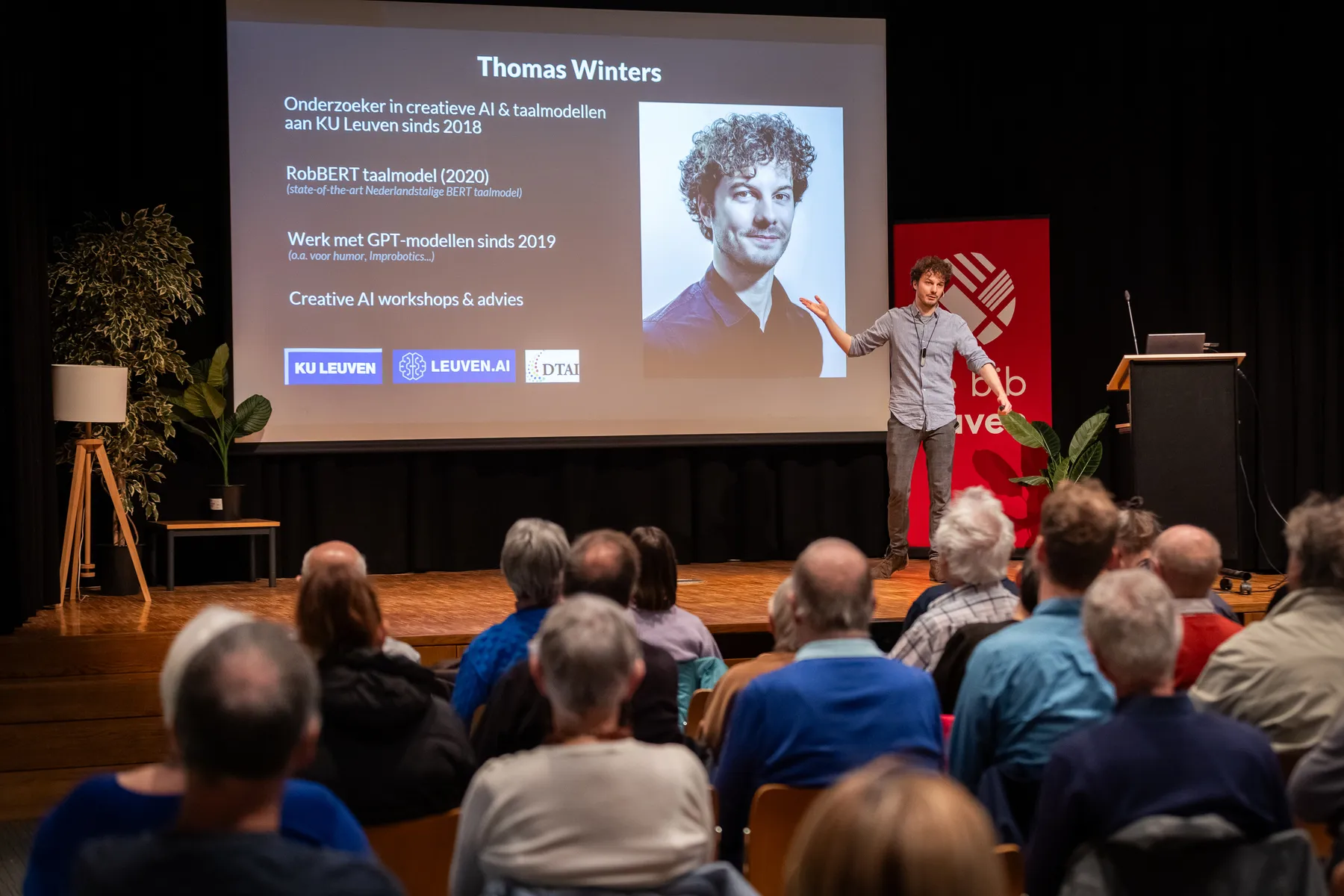
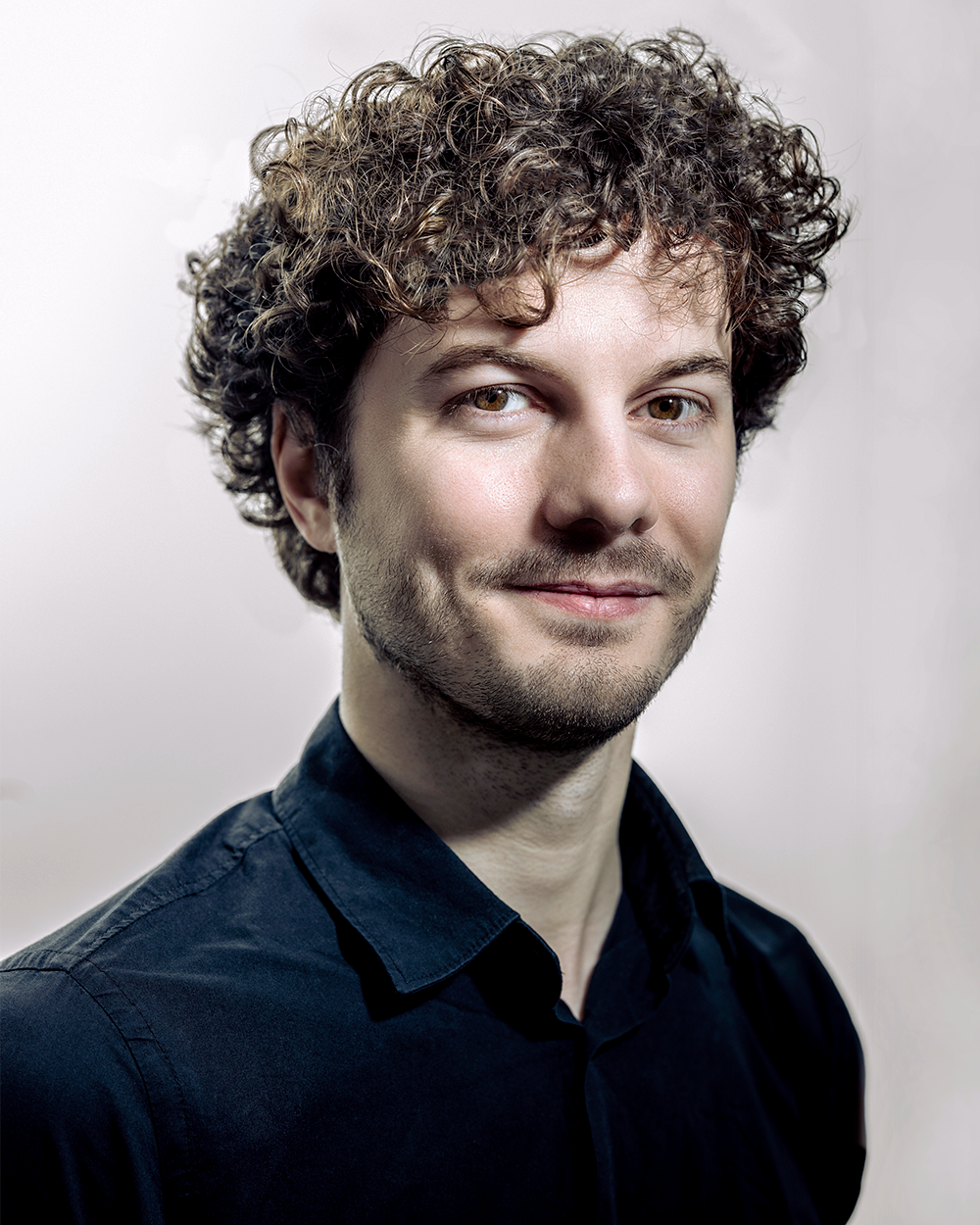
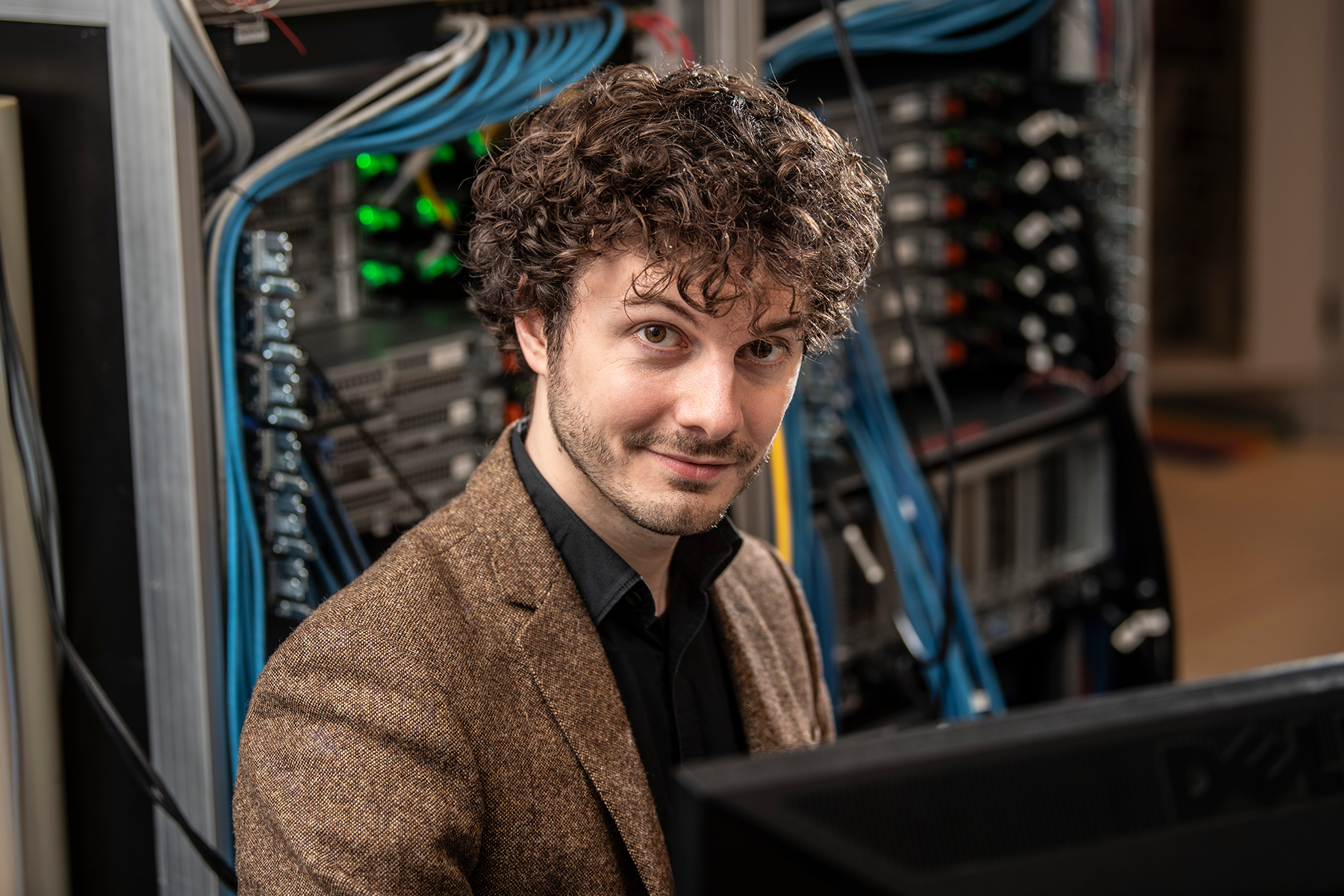
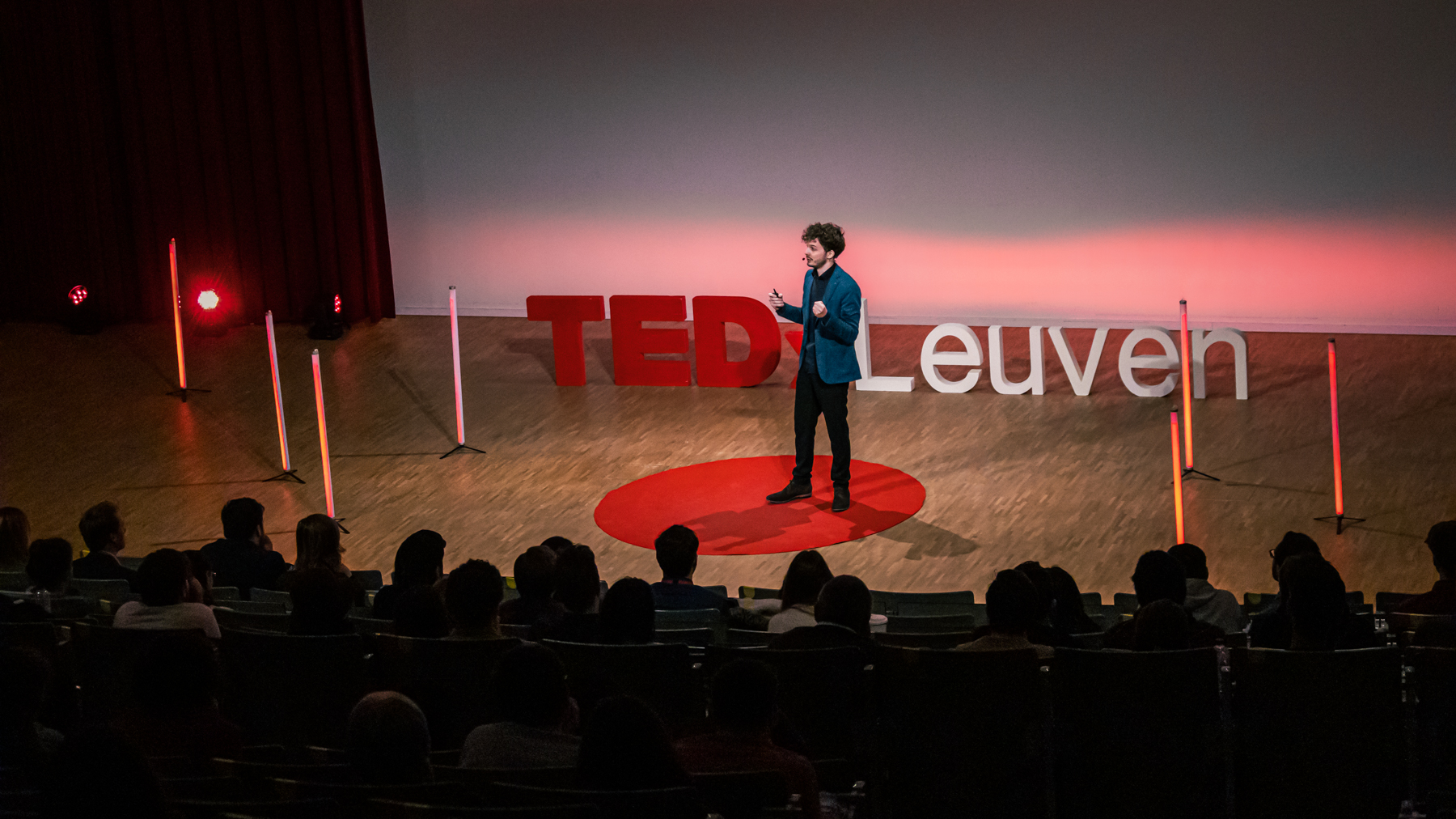
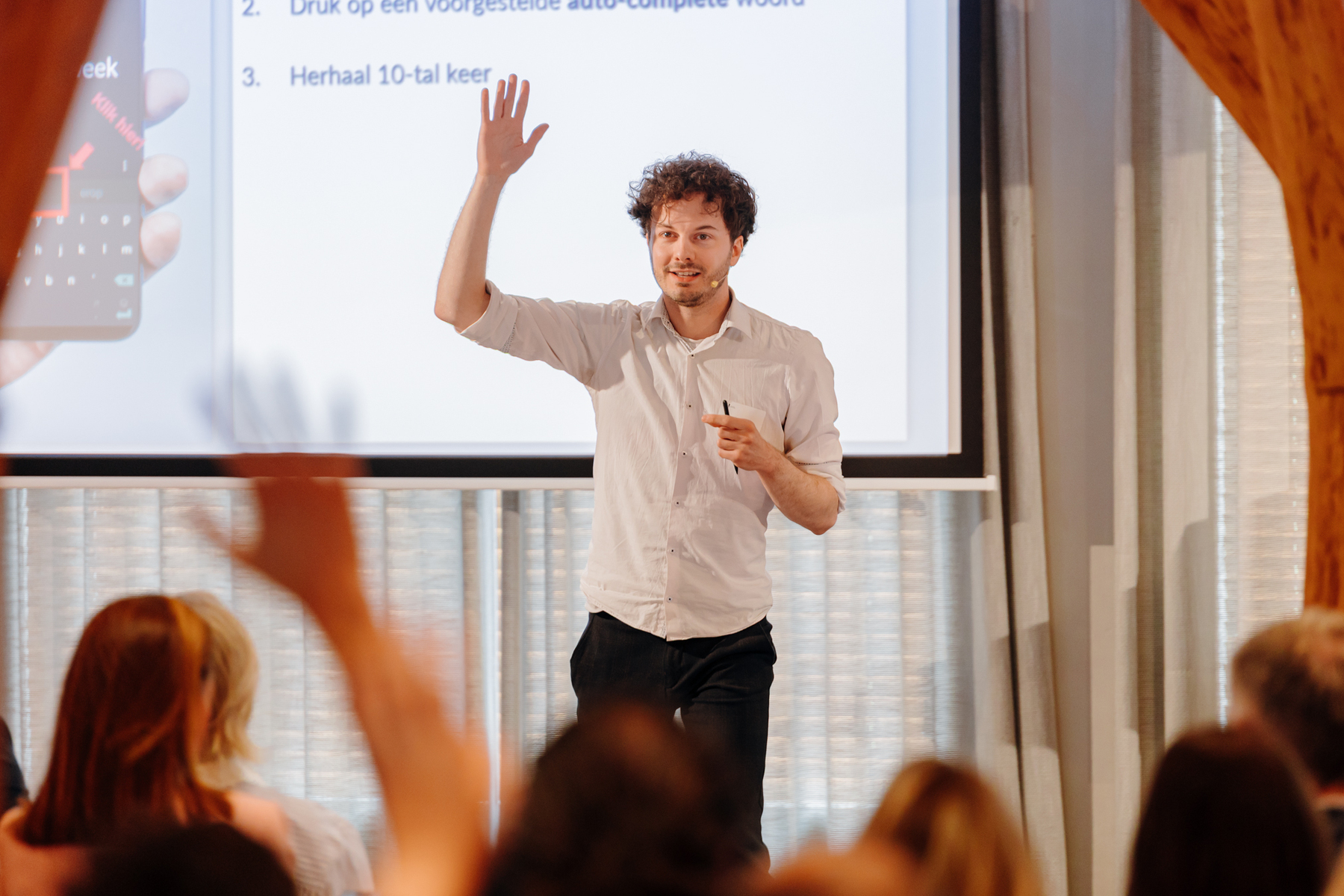
Two portraits and two photos on stage. Pictures has more.
How it goes
- Beforehand, a short call or a few emails about your audience, so I can fit the talk to them.
- I bring my own laptop and connect at the front of the room, with HDMI or USB-C, sound included.
- A headset microphone works best: I gesture and walk around a lot.
- Stable wifi helps for the live demos.
- People can always ask questions during the talk, and I'm happy to add a Q&A at the end too.
- You get the slides afterwards as a PDF, and they go on my website, unless you'd rather not.
- Recording for internal use is fine; ask me before putting it online.